A Product Manager Case Study on Walled Gardens

An examination into software products with social & sharing elements at their core, and the impact of letting your users out of your walled garden.
Tidal recently made a fascinating decision. When sharing a song on tidal in the past, it would simply deliver a link to Tidal to a friend or family member of your choice, through a text message, social media, or other platform. If the recipient didn’t have Tidal, they would be prompted to create an account for a trial or buy the service. This could wind up putting pressure back on the person sharing the song to switch to another service. Tidal reignited my love for music with their lossless high quality audio. I frequently found myself sharing my favorite songs with friends and family members just to have them state “Can’t you switch back to spotify? I can’t open this link you sent me.” Or I’d ask them if they checked out the song I sent them, just to hear them say “Oh – that link didn’t work for me, I use Apple Music because my phone carrier gives it to me free.”
“Can’t you switch back to Spotify? I can’t open this link you sent me.”
~ A friend of Seth’s
Spotify’s Q1 2023 earnings report stated they had 210 million paid subscribers, and 515 million active users, making it extremely likely that a Tidal user wanting to share music with friends and family will encounter a Spotify user who can’t open their link.
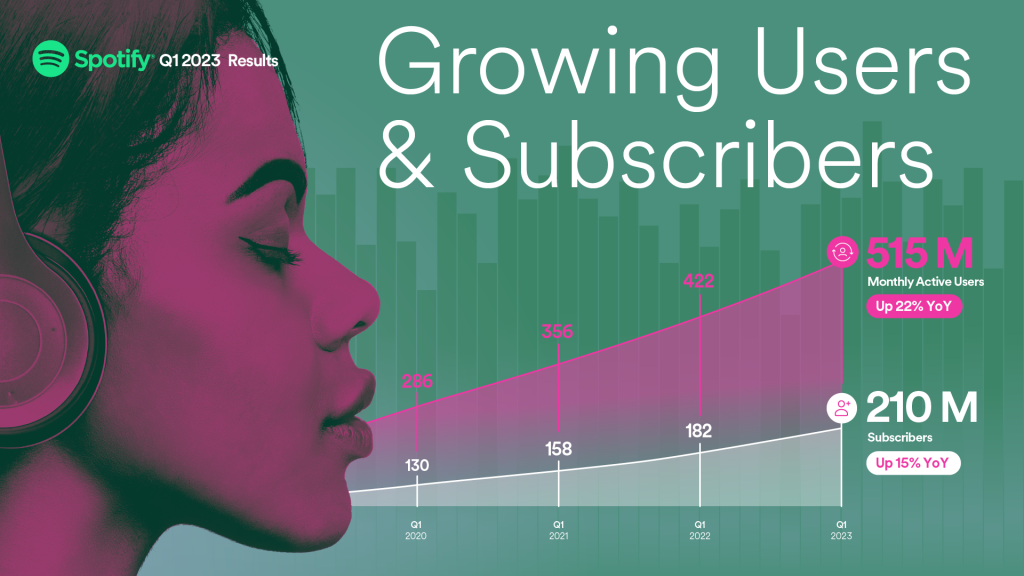
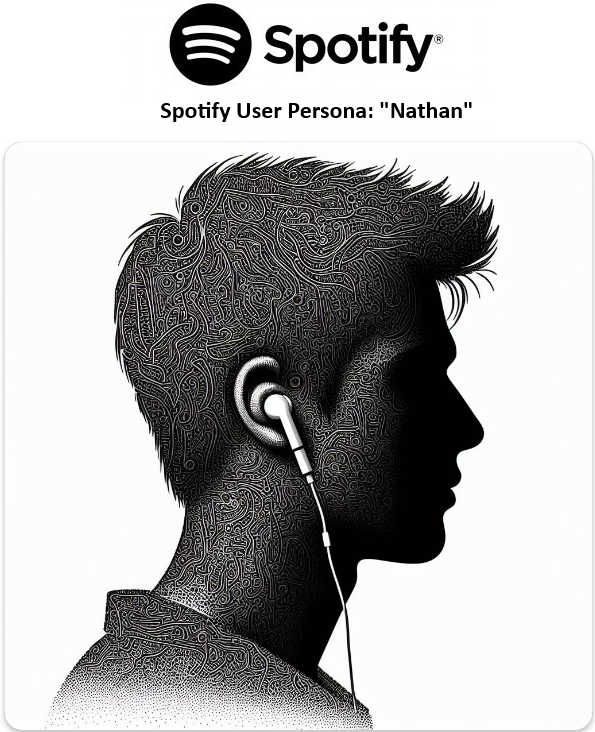
While I don’t directly have access to Tidal or Spotify’s data analytics, we can put on our product manager hat and think through this situation from a user persona perspective. Since I don’t have access to those analytics, we’ll be making some assumptions for the sake of this article & discussion utilizing some user personas. Meet Steven, and Nathan!
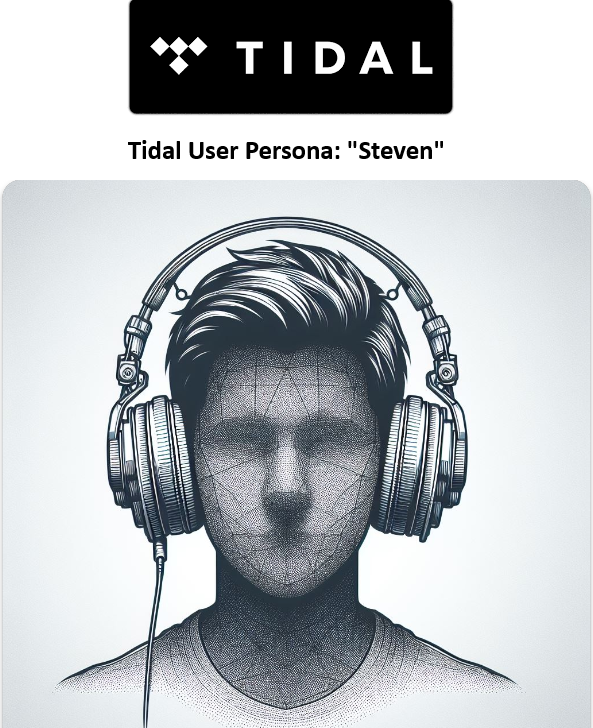
- Steven owns a set of $1,800 headphones (Sennheiser HD 800 S).
- Steven owns a dedicated amplifier to drive the headphones.
- Steven paid Mercedes Benz an extra $2,400 for the Burmester 13 speaker 600 watt sound system in his car.
- Steven refuses to use Bluetooth because it lowers audio quality.
- Steven has disposable income, and always wants the best experience.
- Steven always has the newest Samsung Galaxy Phone at launch.
- Steven has a household income of $150,000 and is single.
- Steven lives in a big city with a 1 hour commute.
- Nathan Uses the earbuds that came with his phone.
- Nathan Sometimes listens to music directly out of the phone speaker when hiking or working out.
- Nathan is Excited his new car had Bluetooth so he could finally ditch his cassette tape to 3.5mm adapter from his last car
- Nathan Loves the convenience of Bluetooth.
- Nathan uses Spotify’s free tier when the subscription doesn’t fit his budget. He’d rather listen to low quality audio than none at all, convenience and access matter more to him than quality.
- Nathan uses whatever free phone his carrier gave him.
- Nathan has a household income of $65,000 and is married with a wife and kids.
- Nathan lives in the suburbs in a outskirts of a larger city.
Tidal users spend more for their subscription than Spotify users, and Tidal does not have a free tier for listening like spotify does. Its safe to assume Tidal users are more likely to value sound quality, and own high end sound systems, headphones, or monitors. These types of users are known as audiophiles and have high engagement metrics such as hours listened per day. Spotify is much more likely to attract users who are more concerned with their budget and convenience than their listening experience due to the cheap or free price, and the lower quality audio stream available.
Personally, I identify more with Steven than with Nathan. While I may not have $1,800 headphones, my car has a respectable 400 watt sound system with a dedicated subwoofer from the factory, and I have 2 $400 sets of high end Sony headphones. I have received a lot of pressure from friends and family to switch back to Spotify so I could share music from my favorite playlists with them. I felt cut off from friends and family when I left Spotify for Tidal, but I refused to go back, instead telling my friends and family that Tidal audio quality was far superior, and just because Spotify was the mainstream didn’t mean it was the best experience.
“I felt cut off from friends and family when I left Spotify for Tidal, but I refused to go back”
My pleas fell mostly on deaf ears, and we had a stalemate, and we eventually stopped sharing music with each-other out of frustration. That is – until recently when an eye grabbing button appeared in the app.
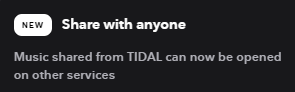
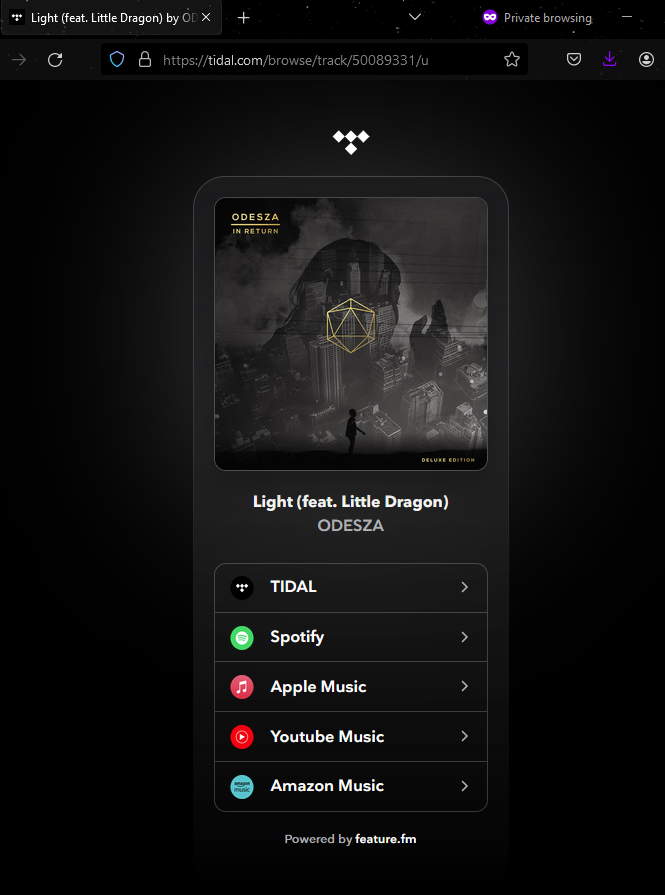
Tidal’s new and improved “share” button states “Listen to Song name on your streaming service” but provides a link that opens in a browser to Tidal’s site. From there, the end user can select if they want to open the song in another service. This feature is powered by “Feature.fm” Feature.fm offers an API integration, allowing this sharing to happen automatically.
This brings an interesting topic to mind “Feature Pressure”. The most common example I can think of this is Apple’s classic “Blue vs green” bubbles when messaging through iMessage. The service is designed to “punish” users who are not using an iPhone through social pressure. Anyone who has been the only user not on an iPhone in a group chat has likely heard of the “Green bubble” pressure spawning many classic memes.
Another common example is “cross-play” between PC gamers, Xbox Gamers, and Playstation gamers. fascinatingly enough, it seems that whichever company has a smaller user base is compelled to break down these walled gardens to help their small user base avoid social pressure for using the “wrong product.” We saw Microsoft (clearly behind Playstation in the current console generation) implement this tactic with cross-play, intending to make sure xbox owners didn’t receive social pressure from PlayStation owners to buy a different console to play with their friends online.
Looking back at our user personas, Steven is now able to share his music with his friends on other services again, including his friend Nathan. Nathan’s streaming service doesn’t offer this same functionality, which means Steven can share music with Nathan, but Nathan can’t easily share music with Steven. This has effectively reversed the “Feature pressure” as Steven will no longer be frustrated when trying to share his music with Nathan, but Nathan may be frustrated if Steven isn’t listening to music shared with him. Steven is likely what the marketing world refers to as an influencer. Setting trends, and discovering products others may not be familiar with. Every time he shares a song with Nathan, Nathan sees some free advertising from Tidal, but that isn’t all. It will become apparent to Nathan that Tidal cares more about Steven, than Spotify cares about him. Tidal is the “Good guy” because their product is not creating a walled garden, their product is no longer isolating their users. Tidal users now have more freedom to share music with anyone. On the surface, this decision might have been hard for Tidal’s product manager to convince executives to implement. If you close your eyes, you can probably imagine the conversation. “How will implementing this feature get us more subscriptions and increase user satisfaction? This removes the pressure from our competitor’s users to switch to our service!”
“How will implementing this feature get us more subscriptions and increase user satisfaction? This removes the pressure from our competitor’s users to switch to our service!”
~ A fictional music streaming executive I made up for this blog post.
The bottom line is this. When any software service is in second, third, or even last place, and that software service relies on any social elements, a valuable tactic can be to bridge the gap between your users and the users of competitive products. Many users will notice that their friend’s product is being more respectful to them than their product is being to their friends and family. This leads to users re-evaluating the relationship with the products they use. Personally, I was a spotify user for a long time because I valued sharing playlist links with friends and family more than I valued audio quality. After I bought a car with a nice sound system and high end headphones, I couldn’t stand the low quality compressed audio on Spotify anymore. After using Tidal for a year with the walled garden “social pressure” to switch back to Spotify from my friends and family, I feel vindicated in my choice to switch after this new feature was enabled on Tidal. Now I can have my cake and eat it too. I can listen to my favorite music on my favorite streaming service, and share it with my friends and family so they can listen on theirs. I would encourage more brands to consider this approach and look at some lagging indicators in their metrics to validate this choice with their user base. Treating your users with respect can go a long way, and I won’t soon forget Tidal’s decision to break me out of a walled garden into a world of hi-fi social freedom.
NOTE: The images for this article were generated using OpenAI’s Dali 3 model. I do not claim ownership of these images, and I am using them for non commercial purposes, as my blog does not contain advertisements, or generate revenue.